Routine Garbage Disposal Care & Kitchen Plumbing Maintenance
Prevent Disposal Problems with Routine Kitchen Plumbing Checks
Practical maintenance for Lakewood homes, restaurants, office kitchens, and multi-unit properties.
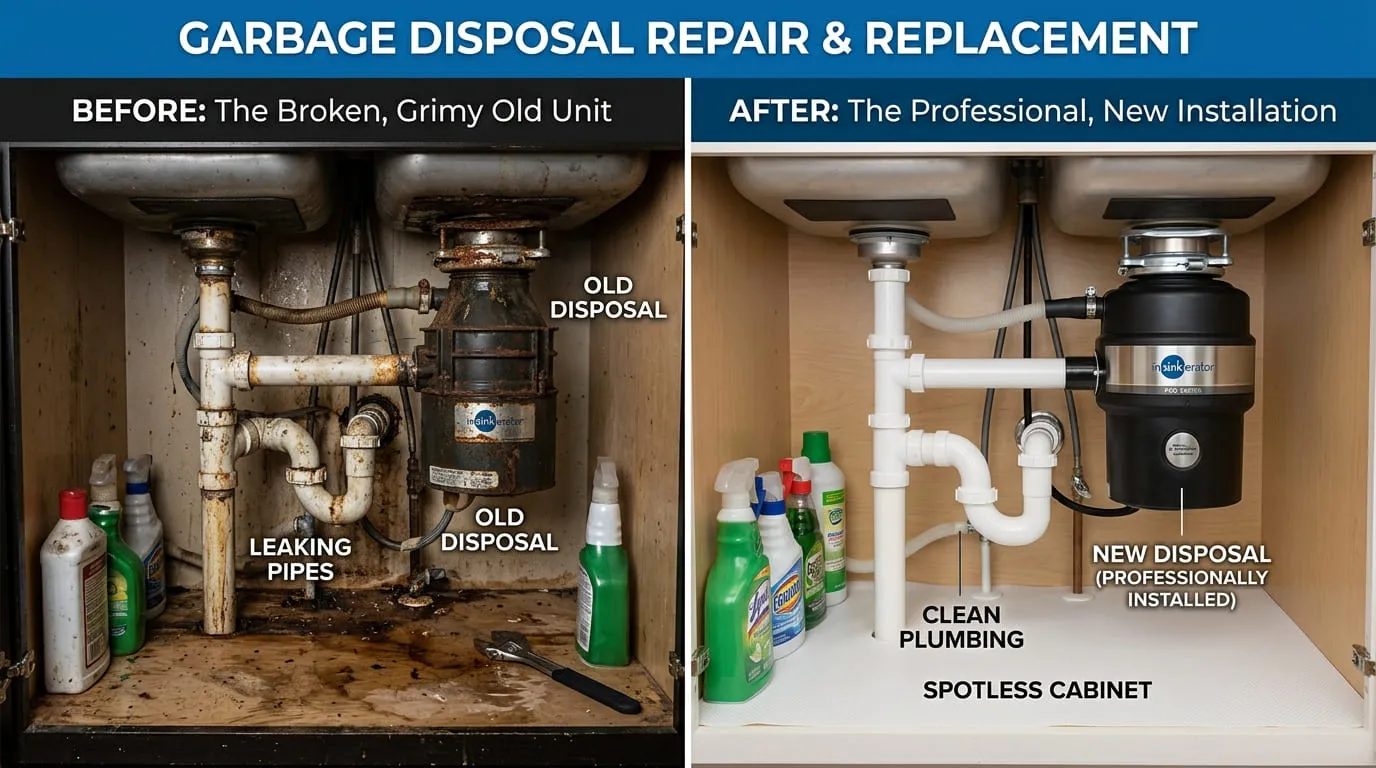
Garbage disposals do not normally require annual certification or municipal reporting. Still, periodic kitchen plumbing checks can help catch drips, loose fittings, early drain restrictions, odors, and excess vibration before they develop into larger issues. Bear Wood Plumbing can inspect disposal and kitchen-drain components during drain cleaning, sink repair, commercial plumbing maintenance, or a scheduled service visit.
| Task | Description | Typical Timing | Benefit |
|---|---|---|---|
| Visual inspection | Look for leaks, corrosion, loose fittings, and cabinet moisture | During service or when symptoms appear | Helps detect leaks early |
| Functional check | Assess normal operation, sound, drainage, and vibration | As needed | Identifies jams, weak performance, and noise |
| Drain evaluation | Inspect connected piping when water backs up or drains slowly | When drainage symptoms occur | Separates drain problems from disposal failure |
| Dishwasher connection check | Assess the discharge hose and inlet connection | During repair or replacement | Helps prevent leaks and dishwasher backup |
| Replacement assessment | Evaluate age, condition, repair value, and capacity needs | After diagnosis | Supports a smart long-term decision |
Routine-Care Reminders
- Use cold water before, during, and briefly after disposal operation.
- Keep grease, cooking oil, coffee grounds, fibrous scraps, bones, shells, and non-food items out of the disposal.
- Do not use a disposal to force a drain blockage through the plumbing.
- Contact a plumber for recurring clogs, cabinet leaks, repeated resets, or a disposal that hums without turning.
- Consider commercial kitchen drain maintenance where high food-waste volumes create recurring backup risk.
Cost note: Pricing depends on the symptom, unit type, repair needs, disposal size, drain condition, access, and whether a new installation requires plumbing or electrical coordination. We provide repair and replacement options after diagnosis.