Why is my sump pump not turning on?
A pump may not start because of a stuck float switch, failed motor, power interruption, tripped breaker, blocked intake, damaged cord, or a problem with the water level in the basin. If water is rising, call (720) 704-4940 for emergency sump-pump service.
What should I do if my sump pump fails during heavy rain?
Avoid electrical hazards. Do not enter standing water or handle damaged wiring near the pump. If it is safe, check whether the pump is plugged in and whether a breaker has tripped. Then call for emergency plumbing support so we can inspect the system and help limit water risk.
Why is there water in my sump pit but the pump is not running?
Common causes include a float switch that is stuck or not activating, power loss, a failed motor, a blocked intake, or a pump that needs replacement. A professional test identifies the actual cause.
My sump pump runs but does not pump water out. What is wrong?
The discharge line may be frozen, clogged, disconnected, damaged, or blocked. The impeller or intake may also be obstructed, and a check valve can affect how the system moves water.
Why does my sump pump keep running after the pit is empty?
The float may be stuck, water may be flowing back through a failed check valve, or the system may still be receiving water. Continuous operation can wear out the pump and should be inspected promptly.
Why does my sump pump turn on and off every few seconds?
Short cycling can result from a float issue, a check-valve problem, improper basin setup, or a water-flow condition that needs diagnosis. Repeated cycling can shorten equipment life.
Can a sump pump discharge pipe freeze in Colorado?
Yes. Exterior discharge pipes can freeze during cold weather, especially where water collects or the outlet is obstructed. A frozen discharge line can prevent the system from moving water out of the basin.
How do I keep my sump pump discharge line from freezing?
The right solution depends on the discharge route and site conditions. Proper pipe sizing, secure routing, clear outlet conditions, and a configuration that avoids trapping water can help. Bear Wood Plumbing can inspect your system and recommend practical improvements.
Should I test my sump pump before snowmelt?
Yes. Testing before spring snowmelt is a practical way to identify a stuck float, weak motor, alarm problem, or discharge blockage before the system is needed.
How do I test my sump pump without waiting for a storm?
If safe and allowed by the manufacturer, you may add water gradually to the basin to see whether the float activates the pump and water discharges. Stop if water rises unexpectedly, the pump does not respond, or you see electrical concerns. Call a plumber if you are unsure.
Should I repair or replace my sump pump?
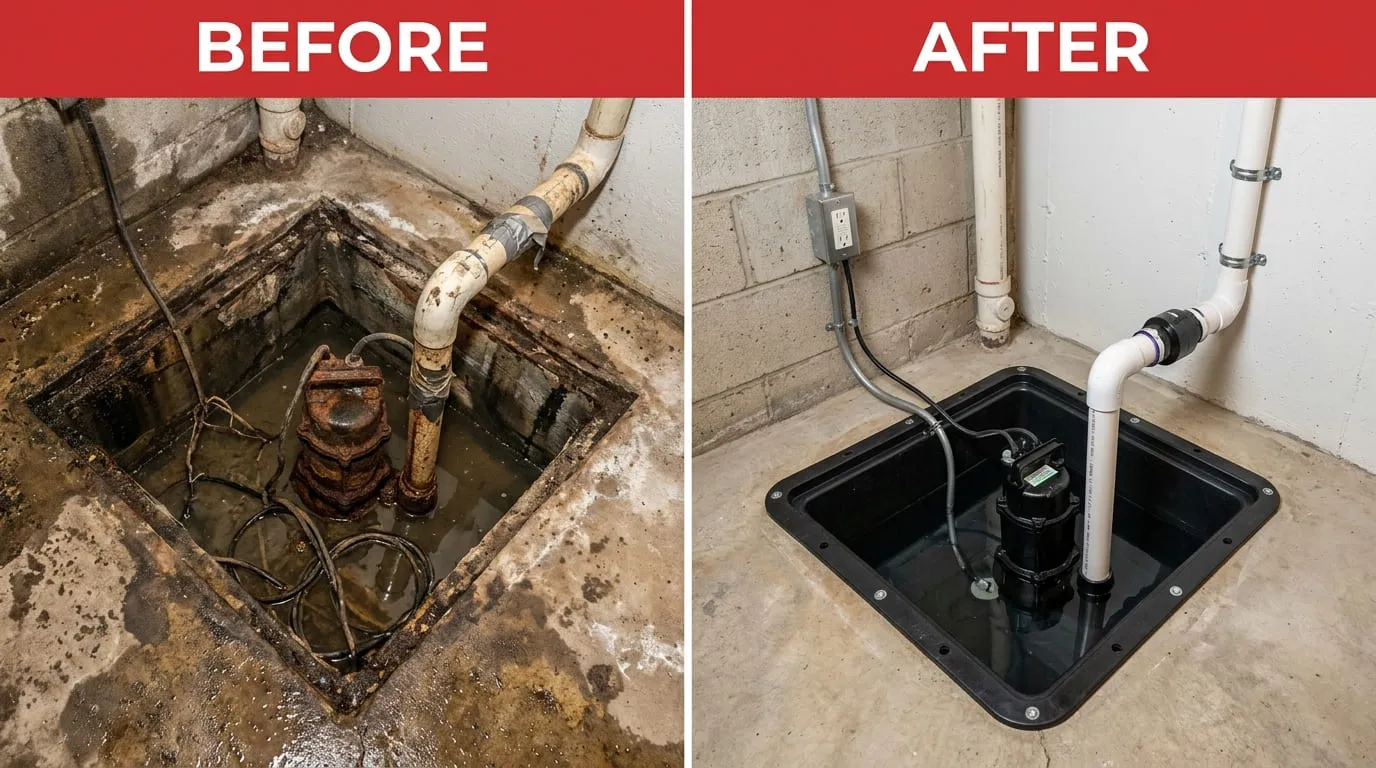
Repair may be appropriate for an isolated float, check-valve, or debris issue. Replacement may make more sense for a failing motor, cracked housing, repeated failures, or a pump that does not keep up with normal water demand.
How long does a sump pump last in Colorado?
There is no universal replacement age. Pump life depends on frequency of operation, motor condition, float reliability, water quality, maintenance, discharge conditions, and whether the system faces heavy seasonal demand.
How much does sump pump replacement cost in Lakewood, CO?
Cost depends on the pump type, capacity, basin access, discharge-line condition, backup features, electrical needs, and any related plumbing work. We provide an inspection and clear options before work begins.
What size sump pump do I need for my basement?
The right size depends on water volume, vertical lift, pipe length, discharge layout, basin size, and property conditions. More horsepower is not automatically better; the pump must match the system.
Do I need a 1/3 HP or 1/2 HP sump pump?
Either may be suitable depending on the property and system. We evaluate demand, discharge height, piping, and existing equipment to recommend appropriate capacity.
Does a sump pump need a check valve?
Yes, a check valve helps prevent pumped water from draining back into the basin after the pump stops. Colorado code provisions require accessible check valves in applicable sump-pump discharge piping; the Colorado residential code storm-drainage chapter provides the relevant requirements.
Do I need a battery backup sump pump in Colorado?
A battery backup can provide additional protection if the primary pump fails or a power outage occurs. It is especially worth considering for finished basements, valuable storage, lower-level equipment, and properties where water intrusion would be costly.
How often should I test or service my sump pump?
Many property owners test before spring and periodically during the year. Professional annual service helps evaluate the float, motor, intake, basin, check valve, discharge line, water alarm, and backup battery.
Can you add a sump pump to a basement without one?
Often, yes. Feasibility depends on existing drainage, access, basement layout, concrete work, electrical availability, discharge-line routing, and why water is collecting. We can evaluate the property and discuss installation options.